
Issue 02
FY26 · Q II
Vitalis.OS
Confidential · for HR
How your workforce
is doing — in plain English.
A one-glance read on 142,842 people across 3 wellness services. What to celebrate, what to watch, what to fix.
Wellness score
78
out of 100
In great shape
In one line
Your team is in great shape — the biggest single win this quarter would be tackling blood pressure & weight in the 30–49 age band.
People engaged
75%
finished their check-in
The good news
Habits are sticking
Mindful minutes (+14%) and steps (+8%) are climbing month-over-month. Your wellness app is working.
3 of 8 trackers improving
Worth watching
Sleep is slipping
1 in 5 employees sleeps under 6 hours. This shows up later as high blood pressure and burnout.
21% sleep < 6h
Act on this
Vitamin D deficiency
38% of your team is low on Vitamin D. Easy fix: bundle a D3 supplement into the next AMC cycle.
38% deficient
Daily habits at a glance
30-day average · from the Vitalis app & connected wearables
Sleep
6.8h
Water
2.1L
Steps
7.4k
Vit D
26ng/mL
Mindful
11min
Screen
6.2h
Alc-free d
21/30
Longevity
72/100
What this means for you
- Celebrate: your wellness score is 78/100 — ahead of similar companies (peer median 68).
- Notice: men make up 62% of staff and carry most of the blood-pressure and cholesterol risk; women lead on screening compliance.
- Plan: a BP + cholesterol + sleep camp for the 30–49 male cohort would move the score most for the least spend.
What's inside
- 01The headlines (this page)
- 02Men vs. women — side by side
- 03Daily habits & Longevity OS
- 04Who's ready to change?
- 05Heart, diabetes, mental & more
- 06The clinical numbers
- 07Each service, in detail (2)
Generated 27 October 2026 · Aggregated & de-identified · k ≥ 25 cell suppression
Data deep-dive
The numbers behind the headlines
Everything on the cover, with the underlying breakdowns. Skim or skip — the headlines page tells you what matters.
Health Culture
Good
Health Perception
Good
Peer benchmark
78 vs 68
Compared to similar-size knowledge-economy employers in India.
Exams & Vaccines (AMC / PEMC)
Blood Pressure Check
vs 85% goal
Dental Exam
vs 85% goal
Physical Exam
vs 85% goal
Bowel Exam
vs 85% goal
Glucose Check
vs 85% goal
Cholesterol Check
vs 85% goal
Mammogram
vs 85% goal
Pap Test
vs 85% goal
Prostate Exam
vs 85% goal
Top Health Conditions (Self-Reported)
- High Blood Pressure37%
- Broken Bones29%
- Back Pain27%
- High Cholesterol24%
- Asthma13%
- Diabetes13%
- Arthritis12%
- Heart Disease9%
- Cancer9%
- Stroke7%
- Osteoporosis5%
Who's in this report
Gender split
→ See Workforce Composition for the full gender breakdown.
Age bands
- 18-2928%
- 30-3941%
- 40-4919%
- 50-599%
- 60+3%
Top locations
Workforce
Composition · Male vs Female
Same cohort, cut by gender. Use this view to spot where the male and female sub-populations diverge on risk, screening compliance, and clinical conditions — and where targeted programmes will land.
Male
88,562
62% of workforce · avg age 35
Female
52,852
37% of workforce · avg age 32
Other / Undisclosed
1,428
1% · reported below k=25 suppression
Age pyramid · share of total workforce
Each row is an age band. Bars expand from the centerline — left = men, right = women. The widest rows are where most of your workforce lives; that's where wellness programs land hardest.
Plain English: ~49% of your workforce sits in the 25–34 band — that's the cohort whose habits set your 5-year cost curve.
Wellness scores · men vs women
Score is out of 100 (higher = healthier). We show two bars per topic — one for men, one for women — on the same scale so you can eyeball the gap.
Top conditions · how prevalence differs by gender
Prevalence = % of that group affected. Read each row as: "X% of men vs Y% of women". The chip on the right tells you who's hit harder and by how much.
High Blood Pressure
Hits men more
+14 pp
High Cholesterol
Hits men more
+12 pp
Diabetes
Hits men more
+7 pp
Obesity (BMI ≥ 30)
Hits men more
+5 pp
Anxiety / Depression
Hits women more
+8 pp
Anaemia
Hits women more
+18 pp
Thyroid disorders
Hits women more
+11 pp
Musculoskeletal pain
Hits women more
+7 pp
Screening & Vaccination Compliance by Gender
| Screening | Male | Compliance | Female | Δ |
|---|---|---|---|---|
| Annual Medical Checkup | 71% | 78% | +7 | |
| Blood Pressure | 84% | 86% | +2 | |
| Lipid Profile | 62% | 68% | +6 | |
| HbA1c / Fasting Glucose | 67% | 71% | +4 | |
| Dental Exam | 74% | 81% | +7 | |
| Mammogram (40+) | — | 54% | n/a | |
| Pap / Cervical (25+) | — | 58% | n/a | |
| PSA / Prostate (45+) | 47% | — | n/a | |
| Flu Vaccination | 53% | 61% | +8 |
Gender-specific screens (mammogram, Pap, PSA) are surfaced only for the applicable cohort. "n/a" = not clinically applicable.
Male cohort — recommended actions
- • Cardiometabolic push: BP + lipid + HbA1c camp in 30-49 band (highest BP & cholesterol prevalence).
- • PSA screening uptake at 47% — target 65% for 45+ male cohort this FY.
- • Tobacco-cessation nudges via EAP; male users are 3.1× more likely to be active users.
Female cohort — recommended actions
- • Anaemia & thyroid: 22% / 14% prevalence — bundle into AMC pathway, not opt-in.
- • Mental wellness: anxiety/depression prevalence is 8pp higher — extend EAP session cap.
- • Maternity & preventive screens (mammogram 54%, Pap 58%) — close to 70% target with reminders.
Lifestyle
Activity Trackers · Longevity OS
Behavioural & biometric signals captured across the Vitalis app, connected wearables, and the Longevity OS module. These are the daily levers that move the wellness score over time.
Longevity Index
72 /100
Peer median 68
Composite of behavioural + biometric signals.
Active trackers
82,848
58% of workforce · ≥1 metric / week
Wearable-linked
44,281
31% · Apple Health, Fitbit, Garmin, Mi
Streak ≥ 14 days
42 %
of active users · habit-formation band
Daily tracker breakdown — population %
 ☾
☾Sleep
avg / night · target 7-9 h
6.8 h
- Duration68%
- Quality56%
- Recovery71%
Sleep debt concentrated in night-shift roles & 30-39 male band. Linked to +12pp BP risk.
 ◇
◇Hydration
avg / day · target 2.5 L
2.1 L
Hydration trend ↑ 6% after Q1 water-station rollout. Push to ≥ 2.5L for 30-49 band.
 ☀
☀Vitamin D
avg serum · sufficient ≥ 30
26 ng/mL
38% below sufficiency — recommend AMC-bundled D3 supplementation pathway.
 →
→Steps & Movement
avg / day · WHO target 10k
7,400
Sedentary cluster in engineering desks. Step-challenge converts 38% in pilot.
 ♡
♡Mindful Minutes
avg / day · breath + meditation
11 min
Highest growth metric (+14%). Correlates with -6pp PHQ-9 in active users.
 ▢
▢Screen Time
after-hours · target < 4 h
6.2 h
After-hours screen correlates with sleep < 6h and digital-eye-strain complaints.
 ✕
✕Alcohol-free Days
self-reported · target ≥ 25
21 / 30
Improvement vs FY25 baseline (18/30). Tied to EAP coaching uptake.
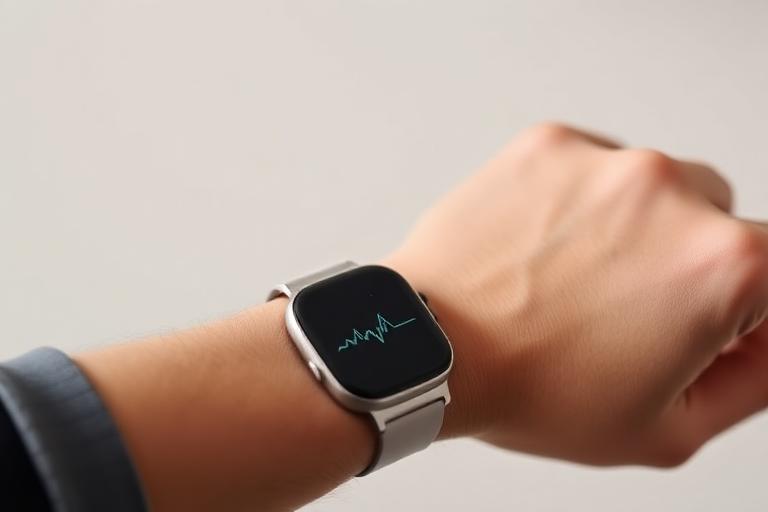 ♥
♥Resting Heart Rate
avg · healthy 60-80
72 bpm
Wearable-linked metric (n = 1,840). Elevated RHR overlaps with sleep-deficient cohort.
Longevity OS · Composite pillars
Weighted composite of behavioural & biometric tracker signals. Index = Σ(pillar × weight).
What this means for the workforce
- ▲Mindfulness & movement are the fastest-growing trackers (+14% / +8%) — keep nudges live in the app.
- ▼Vitamin D & screen-time are deteriorating — recommend AMC-bundled D3 supplementation and a "wind-down" digital-hygiene campaign.
- ●Sleep < 6h in 21% of staff overlaps with elevated resting HR — prioritise this cohort for cardiometabolic screening.
- ●Wearable connections at 31% — expanding to 50% would unlock real-time RHR & HRV trend cards for line managers (de-identified).
Projected impact
Closing sleep + vit-D gaps lifts the Longevity OS index from 72 to ~79 within 2 quarters, with a corresponding +3-4 pt move on overall wellness score.
Behavior
Most Ready to Change
Lifestyle change-readiness across the population. Investment lands hardest on cohorts already in the Ready to Change and Interested bands.
| Topic | Ready | Recently Changed | Maintenance | Interested | Not Interested | Distribution |
|---|---|---|---|---|---|---|
| Stress | 38% | 2% | 15% | 24% | 21% | |
| Weight | 26% | 6% | 47% | 8% | 13% | |
| Blood Pressure | 28% | 5% | 41% | 11% | 15% | |
| Cholesterol | 22% | 5% | 47% | 10% | 16% | |
| Glucose | 6% | 10% | 55% | 10% | 19% | |
| Exercise | 5% | 21% | 61% | 2% | 11% | |
| Tobacco | 1% | 32% | 56% | 6% | 5% | |
| Alcohol | 5% | 1% | 39% | 11% | 44% | |
| Nutrition | 39% | 7% | 28% | 17% | 9% |
Composite
Health Domain Scores
Each ring shows the domain score out of 100. The notch is the industry benchmark (68). Bigger ring fill = healthier cohort.
Heart
Diabetes
Cancer
Obesity
Nutrition
Fitness
Mental
Domain
Heart
Cardiovascular disease is the leading cause of mortality globally. The drivers below are modifiable risk factors that respond to clinical and lifestyle intervention.
Blood Pressure
Weight (BMI)
Nutrition
Tobacco
LDL Cholesterol
Blood Sugar
Triglycerides
Physical Activity
Heart drivers · breakdown
By department · n = 142,842
| Department | People | Blood Pressure | Weight (BMI) | Nutrition | Tobacco | LDL Cholesterol | Blood Sugar | Triglycerides | Physical Activity |
|---|---|---|---|---|---|---|---|---|---|
| Total population | 142,842 | 59 | 60 | 60 | 58 | 56 | 58 | 58 | 59 |
| Tech & Product | 39,996 | 64 | 52 | 65 | 63 | 59 | 63 | 63 | 64 |
| Sales & GTM | 31,425 | 58 | 63 | 59 | 57 | 53 | 57 | 57 | 58 |
| Operations | 25,712 | 61 | 66 | 62 | 60 | 56 | 60 | 60 | 61 |
| Manufacturing | 19,998 | 55 | 60 | 56 | 54 | 50 | 54 | 54 | 55 |
| Finance & Legal | 14,284 | 57 | 62 | 58 | 56 | 52 | 56 | 56 | 57 |
| HR & Admin | 11,427 | 54 | 59 | 55 | 53 | 66 | 53 | 53 | 54 |
Domain
Diabetes
1 in 11 Indian adults lives with diabetes; another 1 in 4 is pre-diabetic. Early detection and metabolic risk control yield the highest ROI.
Blood Sugar
Weight (BMI)
Blood Pressure
Family History
Physical Activity
Nutrition
Triglycerides
Diabetes drivers · breakdown
By department · n = 142,842
| Department | People | Blood Sugar | Weight (BMI) | Blood Pressure | Family History | Physical Activity | Nutrition | Triglycerides |
|---|---|---|---|---|---|---|---|---|
| Total population | 142,842 | 69 | 70 | 70 | 69 | 65 | 70 | 68 |
| Tech & Product | 39,996 | 64 | 62 | 62 | 61 | 70 | 62 | 73 |
| Sales & GTM | 31,425 | 75 | 73 | 73 | 72 | 64 | 73 | 67 |
| Operations | 25,712 | 61 | 76 | 76 | 75 | 67 | 76 | 70 |
| Manufacturing | 19,998 | 72 | 70 | 70 | 69 | 61 | 70 | 64 |
| Finance & Legal | 14,284 | 74 | 72 | 72 | 71 | 63 | 72 | 66 |
| HR & Admin | 11,427 | 71 | 69 | 69 | 68 | 60 | 69 | 63 |
Domain
Cancer
Screening compliance and tobacco/alcohol exposure are the strongest workforce-level levers on cancer risk.
Tobacco
Alcohol
Skin Protection
Screenings
Physical Activity
Fruits & Vegetables
Cancer drivers · breakdown
By department · n = 142,842
| Department | People | Tobacco | Alcohol | Skin Protection | Screenings | Physical Activity | Fruits & Vegetables |
|---|---|---|---|---|---|---|---|
| Total population | 142,842 | 65 | 69 | 68 | 66 | 64 | 64 |
| Tech & Product | 39,996 | 68 | 74 | 63 | 65 | 69 | 69 |
| Sales & GTM | 31,425 | 62 | 68 | 74 | 59 | 63 | 63 |
| Operations | 25,712 | 65 | 71 | 60 | 62 | 66 | 66 |
| Manufacturing | 19,998 | 59 | 65 | 71 | 73 | 60 | 60 |
| Finance & Legal | 14,284 | 61 | 67 | 73 | 75 | 62 | 62 |
| HR & Admin | 11,427 | 75 | 64 | 70 | 72 | 59 | 59 |
Domain
Obesity
Body composition is upstream of cardiometabolic, musculoskeletal, and mental-health outcomes. Movement and nutrition dominate the signal.
Weight (BMI)
Nutrition
Physical Activity
Sleep
Obesity drivers · breakdown
By department · n = 142,842
| Department | People | Weight (BMI) | Nutrition | Physical Activity | Sleep |
|---|---|---|---|---|---|
| Total population | 142,842 | 41 | 39 | 43 | 43 |
| Tech & Product | 39,996 | 46 | 42 | 38 | 35 |
| Sales & GTM | 31,425 | 40 | 36 | 49 | 46 |
| Operations | 25,712 | 43 | 39 | 35 | 49 |
| Manufacturing | 19,998 | 37 | 33 | 46 | 43 |
| Finance & Legal | 14,284 | 39 | 35 | 48 | 45 |
| HR & Admin | 11,427 | 36 | 49 | 45 | 42 |
Domain
Nutrition
Dietary patterns directly influence cholesterol, glucose, blood pressure, and inflammation markers measured elsewhere in this report.
Nuts & Seeds
Beans & Legumes
Saturated Fats
Sugar & Sweets
Salt
Red & Processed Meat
Fruits & Vegetables
Whole Grains
Nutrition drivers · breakdown
By department · n = 142,842
| Department | People | Nuts & Seeds | Beans & Legumes | Saturated Fats | Sugar & Sweets | Salt | Red & Processed Meat | Fruits & Vegetables | Whole Grains |
|---|---|---|---|---|---|---|---|---|---|
| Total population | 142,842 | 56 | 58 | 58 | 57 | 54 | 58 | 54 | 53 |
| Tech & Product | 39,996 | 61 | 53 | 50 | 49 | 57 | 50 | 57 | 58 |
| Sales & GTM | 31,425 | 55 | 64 | 61 | 60 | 51 | 61 | 51 | 52 |
| Operations | 25,712 | 58 | 50 | 64 | 63 | 54 | 64 | 54 | 55 |
| Manufacturing | 19,998 | 52 | 61 | 58 | 57 | 48 | 58 | 48 | 49 |
| Finance & Legal | 14,284 | 54 | 63 | 60 | 59 | 50 | 60 | 50 | 51 |
| HR & Admin | 11,427 | 51 | 60 | 57 | 56 | 64 | 57 | 64 | 48 |
Domain
Fitness
Physical activity has positive effects on 23+ health conditions. Sedentary hours are the strongest negative predictor.
Cardio Activity
Strength
Sedentary Hours
Active Transport
Fitness drivers · breakdown
By department · n = 142,842
| Department | People | Cardio Activity | Strength | Sedentary Hours | Active Transport |
|---|---|---|---|---|---|
| Total population | 142,842 | 60 | 61 | 62 | 63 |
| Tech & Product | 39,996 | 59 | 53 | 57 | 55 |
| Sales & GTM | 31,425 | 53 | 64 | 68 | 66 |
| Operations | 25,712 | 56 | 67 | 54 | 69 |
| Manufacturing | 19,998 | 67 | 61 | 65 | 63 |
| Finance & Legal | 14,284 | 69 | 63 | 67 | 65 |
| HR & Admin | 11,427 | 66 | 60 | 64 | 62 |
Domain
Mental
Mental wellness (EAP) is not part of this contract. Add the Mental Wellness service to unlock PHQ-9 / GAD-7 surveillance, counsellor utilisation, and crisis-line metrics for this cohort.
Clinical
Biometrics
Blood Pressure
Total Cholesterol
LDL Cholesterol
HDL Cholesterol
Triglycerides
Fasting Glucose
HbA1c
BMI
Provenance
Report Provenance
Sources
- • HRA questionnaire (n = 94,276)
- • Annual Medical Checkup labs (n = 59,994)
- • OPD consult outcomes
Methodology
- • De-identified cohort aggregation (k ≥ 25 cell suppression)
- • Risk bands derived from CDC + ICMR cut-offs
- • Composite score = weighted avg of 7 health domains
- • Confidence interval ±2.4% at 95% CL
Annual Medical Checkup
AMC Compliance & Findings
Mandatory annual examination compliance, exam-wise completion and incidental findings.
Eligible cohort
88,562
Checkups done
70,141
79% compliance
Critical flags
2,876
referred to specialist
Net new diagnoses
5,050
Exam-wise completion
- CBC68,738%
- Lipid panel65,933%
- LFT / KFT62,425%
- HbA1c60,321%
- TSH49,800%
- ECG43,487%
- Chest X-ray28,758%
Top incidental findings
- Vitamin D deficiency26,654
- Pre-diabetic HbA1c11,924
- Elevated LDL14,730
- Hypertension stage I6,313
- Fatty liver (Grade I)9,118
- Anaemia (Female)5,611
Cashless OPD
OPD Consultation & Claims
Network utilisation, claims throughput and clinical mix across the contracted OPD panel.
Claims processed
122,558
this quarter
Avg claim value
₹1,214
Cashless share
86%
14% reimbursement
Avg approval TAT
7.6 h
from intimation to authorisation
Top diagnoses (ICD-10 mapped)
- J06 · Acute URI22,060
- K30 · Functional dyspepsia13,481
- M54 · Back pain11,030
- R51 · Headache9,805
- L20-30 · Dermatitis8,579
- H10 · Conjunctivitis6,128
- E11 · T2 diabetes follow-up6,128
- I10 · Essential hypertension4,902
Network vs out-of-network
- In-network cashless86%
- Reimbursement2%
- Network leakage12%
Leakage concentrated in NCR & Pune; recommend onboarding 4 additional polyclinics there.
Top providers by claim volume
- Apollo Clinic — Bengaluru ORR11,030
- Fortis — Mumbai Mulund8,579
- Manipal — Hyderabad Madhapur7,353
- Practo Care — Pune Baner6,128
- Max Healthcare — NCR Saket4,902
- Aster — Bengaluru Whitefield4,902
Denials & exceptions
- Total denials4,167 (3.4%)
- · Non-covered procedure38%
- · Missing pre-auth27%
- · Duplicate submission19%
- · Eligibility lapse16%
⚠ Duplicate submissions are +2.4 pp QoQ — investigate top 3 providers.
Claim hotspots
Where claims are happening
What employees are spending on, in which cities, and which categories are accelerating fastest.
Spend by claim category
- GP / OPD consult41,670
- Diagnostics & labs25,737
- Pharmacy refill19,609
- Specialist consult13,481
- Dental8,579
- Vision7,353
- Preventive checkup6,128
Diagnostics is the fastest-growing line (+18% QoQ) — largely follow-ups for cardiac & metabolic risk flagged in HRA.
Top 6 cities by claim volume & average ticket
| City | Claims | Avg ticket | QoQ | Mix |
|---|---|---|---|---|
| Bengaluru | 31,865 | ₹1,311 | +9% | |
| NCR | 23,286 | ₹1,384 | +12% | |
| Mumbai | 19,609 | ₹1,481 | +6% | |
| Hyderabad | 15,933 | ₹1,238 | +14% | |
| Pune | 13,481 | ₹1,165 | +4% | |
| Chennai | 9,805 | ₹1,275 | +7% |
Forward look · model v3.2
Next 4 quarters — predicted claims & spend
Forecast blends current run-rate, seasonality, HRA risk signals and demographics shifts. Shaded band = 80% confidence.
Quarterly claim volume — actuals & forecast
12-month projection
Projected claims (next 4Q)
560,090
↑ 14% vs trailing 4Q
Projected spend
₹73 Cr
avg ticket trending ₹1,311
Cashless share (forecast)
90%
if 4 new polyclinics added in NCR & Pune
Categories expected to grow / decline (next 12 months)
- Cardiac diagnostics (ECG, lipid, 2D-Echo)↑ 28%HRA flagged 12% population with BP/lipid risk
- Mental health consults↑ 22%GAD-7 / PHQ-9 caution band grew +6 pp
- Diabetes follow-up & HbA1c↑ 18%Pre-diabetes prevalence 24% in 30–49 band
- Physiotherapy & MSK↑ 14%Back pain is the #3 ICD this quarter
- Paediatric consults (dependents)↑ 9%New dependent enrolment cycle in Q+1
- Acute URI / seasonal↓ 6%Base effect post the Q-2 viral surge
- Dermatology (cosmetic)↓ 4%Network re-pricing, fewer eligible providers
What this means for HR & Finance
- Budget: hold a +14% reserve on the OPD line for FY+1 — driven by diagnostics & specialist mix.
- Network: close NCR & Pune gaps to lift cashless share from 86% → ~90% and cut reimbursement TAT.
- Prevention: pulling cardiac & metabolic screening forward by 1 quarter is projected to defer ~4,902 claims into preventive (~40% cheaper).
- Mental health: raise EAP session cap before Q+1 — utilisation is forecast to cross policy ceiling for ~6% of users.
Model: Holt-Winters + HRA risk regression · refreshed weekly · 82% in-sample fit
Predictive · individual claim patterns
Life events we expect — from how people are claiming today
When a person's claims start clustering (e.g. 3+ gynaec consults + folic acid + ultrasound), the model flags a likely life event ahead. Used to plan benefits, not to surveil — names are never surfaced, only cohort counts.
Pregnancy / Maternity
2,000
people · 0–9 mo
New chronic onset (HTN/T2D)
4,428
people · 3–12 mo
Planned surgery (MSK/cardiac)
1,286
people · 1–6 mo
Family expansion (paeds)
3,143
people · 6–18 mo
Eldercare onset (parent dep.)
2,571
people · 3–12 mo
Mental-health escalation
3,857
people · 0–6 mo
Signal pattern → predicted event → recommended action
Patterns derived from rolling 90-day claim windows · de-identified at the cohort level (k ≥ 25) · never displays member PII
Spend impact of predicted events
Projected event spend
₹123.7 Cr
~832% of next-year OPD outlay tied to predictable life events — most of it queue-able into pre-arranged packages at ~18% lower ticket.